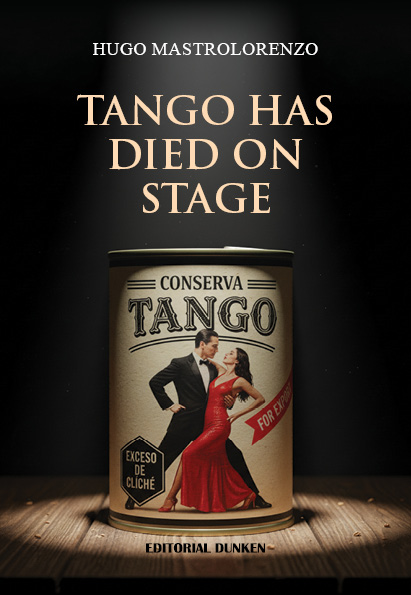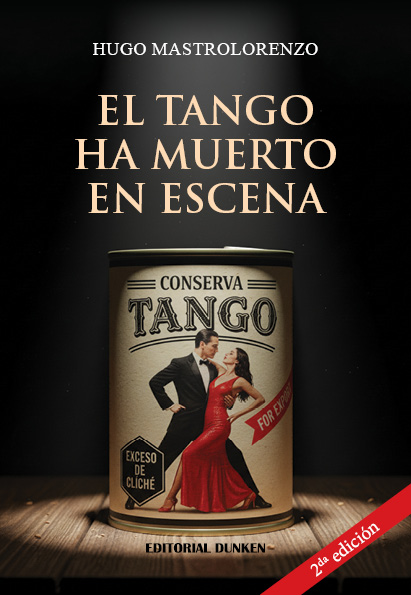
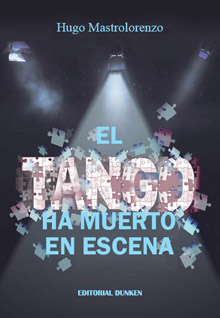
El Tango ha muerto en escena
- Género
- ARTE - Danza - Ensayo
- ISBN
- 978-9878547725
- Páginas
- 208
- Formato
- 14.5 cm x 21 cm
- Colofón
- diciembre de 2025
¿Podríamos definir la escena actual de tango
como arte o como un entretenimiento estetizante?
¿La escena actual está viva, o ya ha muerto?
¿Cuándo y por qué surge la representación escénica de la danza tango?
¿Cuándo y por qué surge el tango social,
las exhibiciones de milonga y el tango for export?
¿Cuándo afloran las imágenes icónicas
que cristalizaron la escena del tango?
Un relato distópico acerca de un tango robotizado y clonado. En paralelo, un recorrido sobre la historia del tango en sus diversos espacios de representación, un ensayo crítico sustentado en la investigación, desde adentro y desde afuera, sobre el tango en escena.
“Entrás a escena, el espacio está vacío,
te detenés un instante…
te asaltan las preguntas:
¿Qué es lo que voy a hacer?
No, el espacio no está vacío, está lleno de lugares comunes,
de movimientos gastados, de gestos roídos que otros
ya han habitado cientos de veces,
y que vos tomaste prestados tiempo atrás
para ser parte de esta comunidad.
Comienza el ritual de la escena:
nos paramos frente al público,
suena un tango…”
Hugo Mastrolorenzo developed a notation system, a teaching method, and a new theory about the origin of tango. His books have been highlighted by the press as “one of the sharpest contributions to the genre.” A provocative choreographer, he succeeded in forging his own language, expressing a renewed conceptual perspective. He has taught classes and performed on the most emblematic stages of Argentina and in dozens of cities across Europe, America, and Asia. World champion in tango dance, together with Agustina Vignau, he received the highest rating from three jury members, achieving the most extraordinary score in the history of the world championships. He received the Min-On Concert Association award from Japan, the distinction from the Chamber of Deputies of the Argentine Nation, the Tango Prize for his work “Volá,” and the “Ambassadors of Tango” award, sponsored by UNESCO, Pro Tango, and the Presidency of the Argentine Nation. Some media outlets claim his greatest achievement lies in his research contributions to the genre, while others maintain his greatest merit is breaking traditional paradigms of stage tango.
También de este autor


Libros que te pueden interesar